
Heavy, Tired Eyes After Screen Work: What to Check
By ScreenSky · · 3 min read
Explore reasons eyes feel heavy after screen work, note useful symptom patterns, and learn when an eye examination matters more than another setting.

On this page
Heavy eyes can describe sleepiness, gritty discomfort, difficulty keeping text clear or eyelids that feel tired. Start by describing the experience. The phrase alone cannot identify the cause.
Separate sleepiness from eye discomfort
Note whether you want to fall asleep or feel awake but your eyes hurt. Does it follow one task, appear late in the day, or happen away from screens too?
The National Eye Institute describes dry eye as a condition that can cause scratchiness, burning and blurry vision. Screen use can be relevant, but a heavy feeling does not establish that diagnosis.
If sleepiness is the main problem, changing the display theme may miss what needs attention. If discomfort persists, an examination can check factors a productivity app cannot see.
Observe the next ordinary session
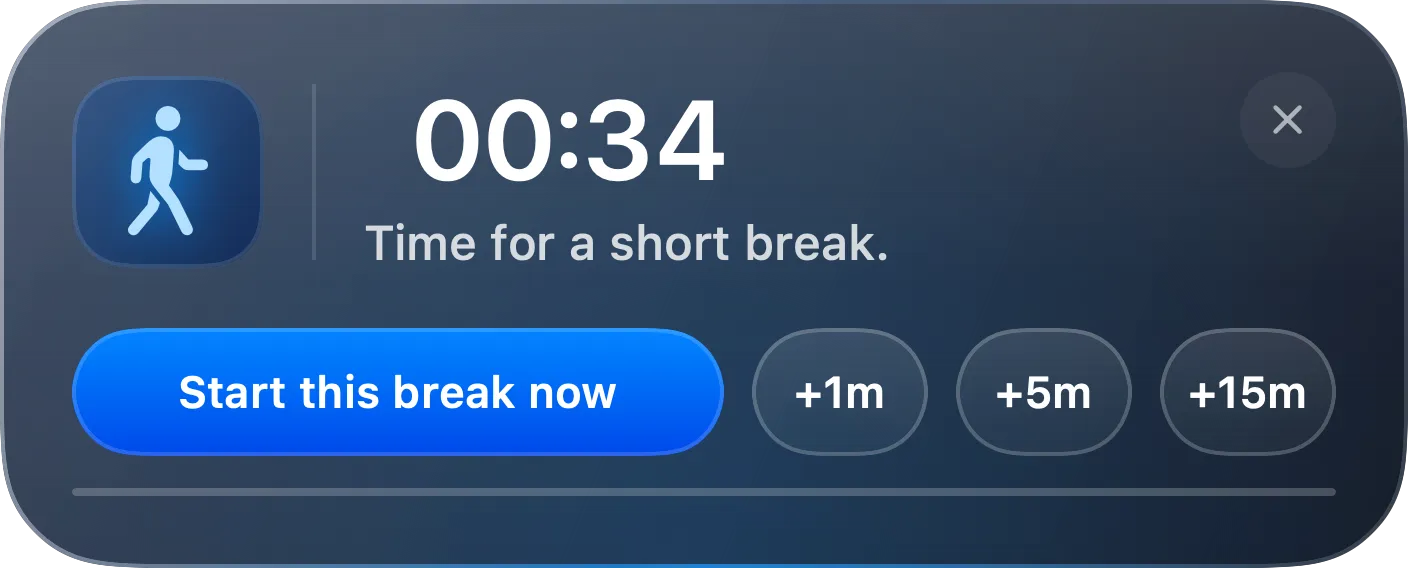
Before starting, note how your eyes feel. Open a normal document at a comfortable size and check for reflections. Place a reminder where you will notice it, then take an actual off-screen pause.
Record a few details:
- The task during which symptoms began.
- Whether one eye or both were affected.
- Whether there was blur, redness, pain or light sensitivity.
- Whether you wore contacts.
- What changed after stopping the task.
This is a record for an appointment, not a diagnostic score. Do not deliberately reproduce symptoms to find your limit.
Look beyond the monitor
Check whether air blows toward your face, the room is unusually dry, or contacts have been worn longer than usual. NHS guidance lists contact lenses and heated or air-conditioned environments among relevant dry-eye factors.
For lubricating drops or contact-lens compatibility, ask a pharmacist or eye-care professional. Another person’s online routine may involve a different condition or treatment.
Make a break different from the work
Moving from laptop to phone leaves you doing another close-up reading task. Choose a destination before starting: a window, a water refill or another room.
If you worry about forgetting your work, write a precise return note, such as “Compare the second invoice total with the exported CSV.” That gives you somewhere to resume without keeping the whole task in your head.
If a cue keeps getting ignored, change its timing or make the next action easier. Do not interpret dismissing a timer as a measure of your health.
When to get help
Persistent or recurring symptoms deserve an eye-care appointment. Seek urgent care for a painful red eye or sudden vision changes. Do not wait for a reminder routine to resolve those symptoms.
For recurring blur, read the blurred-vision guide and note the circumstances. ScreenSky can remind you to step away; it cannot determine why your eyes feel heavy or whether continuing work is safe.
Sources
- National Eye Institute: Dry eye (checked )
- NHS: Dry eyes and when to seek help (checked )